
Direct OTT Bollywood Films: Why Is the Model Returning in 2026?
For many Bollywood producers, the question used to be simple:
When should the movie release in theatres?
In 2026, another question has become increasingly important:
Does this movie need a theatrical release at all?
The answer depends on the film’s budget, genre, cast, audience appeal, distribution costs and the availability of a streaming buyer.
The industry has also changed significantly since the pandemic.
During 2020 and 2021, direct-to-OTT releases were largely an emergency response to cinema closures.
Films such as Gulabo Sitabo, Shakuntala Devi, Laxmii and Gunjan Saxena: The Kargil Girl demonstrated that major Hindi movies could reach audiences without traditional theatrical premieres.
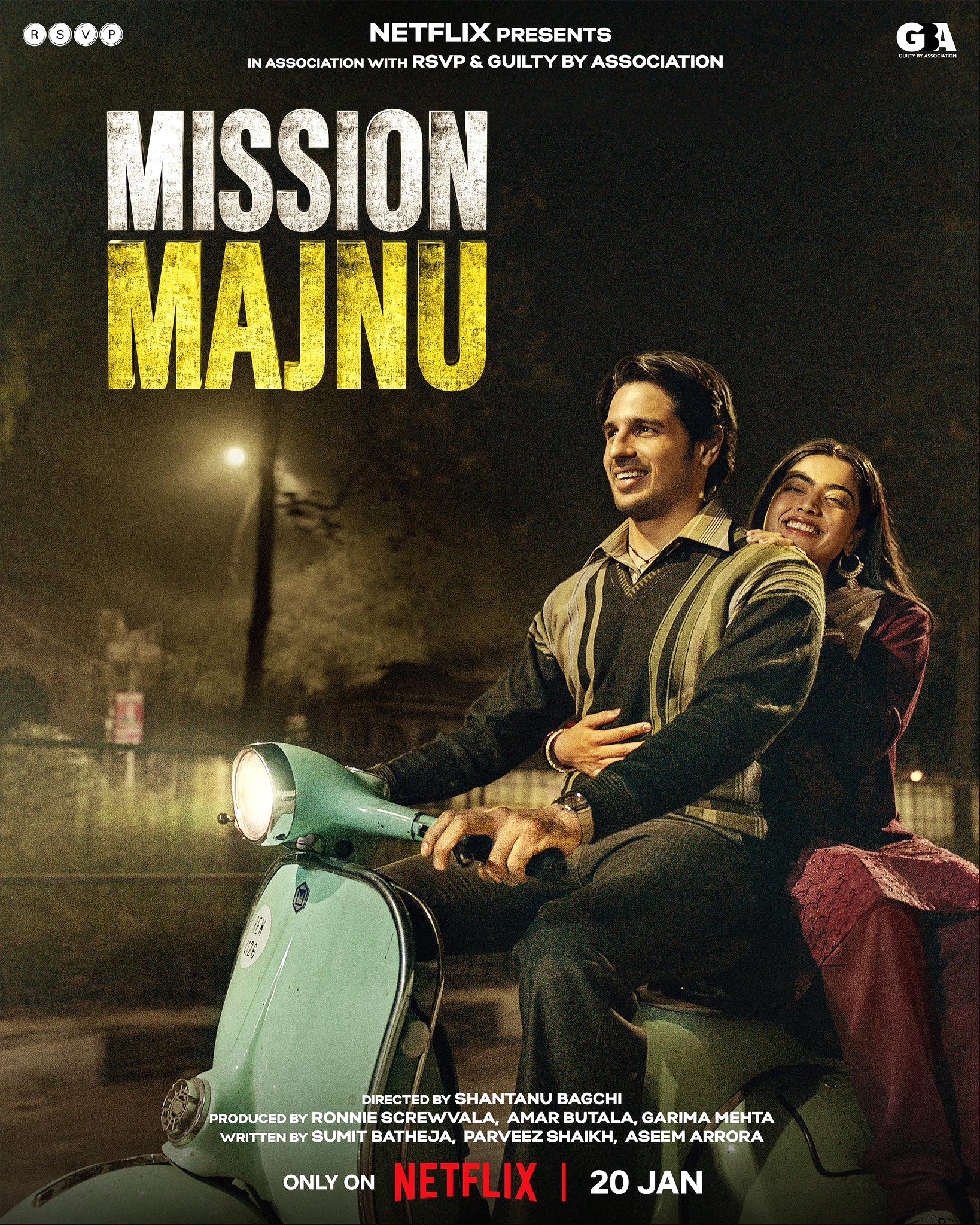
Then came films such as Mission Majnu and Freddy, which became prominent examples of the post-pandemic direct-OTT strategy.
But 2026 is different.
The decision to skip theatres is increasingly connected to economics, distribution risk and the changing value of streaming rights.
Direct OTT Bollywood Films in 2026: Why Are Movies Avoiding Theatres?
The OTT Gold Rush Is No Longer What It Used to Be
One of the biggest changes is happening on the streaming side.
A few years ago, producers could sometimes expect an OTT platform to pay a substantial amount for digital rights even before a movie reached theatres.
That created a financial safety net.
The thinking was straightforward:
Make the movie → sell digital rights → recover a large part of the investment → use the theatrical release for additional revenue.
That model has weakened.
A June 2026 report by The Indian Express noted that OTT platforms were acquiring some independent films for prices as low as ₹30 lakh, with acquisition value increasingly influenced by theatrical performance.
Mint also reported that while the streaming market had become more competitive, mid-scale films continued to struggle for meaningful deals, with larger star-led titles benefiting more from the market.
This changes the producer’s calculation.
An OTT deal is no longer automatically a financial guarantee.
Why Theatres Have Become a Bigger Risk for Mid-Budget Films
Theatrical distribution involves much more than putting a film on a screen.
There are expenses related to:
- Prints and exhibition
- Marketing
- Advertising
- Distribution
- Promotional tours
- Multiplex negotiations
- Publicity
- Release logistics
Then there is the biggest problem:
Will people actually buy tickets?
A major action spectacle such as Dhurandhar 2, Border 2 or another large franchise can create an event around its release.
A smaller drama or experimental film may not have the same advantage.
This is why the difference between event cinema and ordinary cinema has become increasingly important.
Audiences Are Becoming More Selective About Theatre Visits
The audience has not abandoned theatres.
The 2025 and 2026 box office actually demonstrated that audiences can still turn up in enormous numbers when a film generates sufficient excitement.
The problem is that audiences are becoming selective about which movies deserve a theatre ticket.
A viewer may happily spend money on a large-scale action film, major franchise or spectacle.
But that same viewer may decide to wait for OTT when the film is a small drama, intimate romance or experimental story.
This has created a difficult situation for mid-budget Bollywood.
The film may have a good story.
It may have strong performances.
But if audiences do not consider it a theatrical event, the opening can be weak.

Satluj: One of the Most Important 2026 Examples
One of the most unusual direct-to-OTT stories of 2026 is Satluj, directed by Honey Trehan and starring Diljit Dosanjh, Arjun Rampal and other actors.
The film was originally titled Panjab ’95 and had been stuck in certification difficulties for years.
After an extended battle with the Central Board of Film Certification, the film finally reached audiences on ZEE5 on July 3, 2026 under the new title Satluj.
It did not receive the conventional theatrical launch.
Instead, the makers chose a direct digital route.
The release itself became unusual.
Satluj was removed from ZEE5 in India just two days after its premiere, with the platform saying it would remain unavailable until further notice.
The case demonstrates that direct OTT is not always simply a commercial decision.
Sometimes streaming becomes an alternative route for a film that has faced obstacles in the traditional theatrical system.
Ghamasaan Shows Another Side of Direct OTT
Another 2026 example is Ghamasaan, starring Arshad Warsi and Pratik Gandhi and directed by Tigmanshu Dhulia.
The action drama had festival screenings, including a world premiere at the MAMI Mumbai Film Festival, before receiving a wider digital release directly on ZEE5.
ZEE5 currently lists the film as a 2026 Hindi movie and describes its story around an IPS officer confronting a feared dacoit.
This is a different situation from Satluj.
There was no major theatrical campaign followed by a box-office failure.
Instead, the film moved towards digital distribution as its primary wider-audience route.
This shows how OTT can function as a destination rather than merely the second window.
Mahavatar Narsimha Proved That Even Animation Can Challenge Star Vehicles
Another 2025 surprise was Mahavatar Narsimha.
There was no conventional Bollywood superstar selling the film.
Instead, the film relied on mythology, animation, family audiences and word of mouth.
It opened modestly but grew dramatically.
Trade reports placed its India net collection above ₹250 crore, while worldwide estimates crossed ₹300 crore.
That is remarkable when compared with several much more expensive star-led projects released during the same period.
Mission Majnu and Freddy: The Earlier Direct-to-OTT Examples
Although the main focus of this article is 2025–2026, Mission Majnu and Freddy remain important because they help explain how Bollywood reached the current stage.
Mission Majnu
Starring Sidharth Malhotra, Mission Majnu was released directly on Netflix in 2023.
The spy thriller had the kind of scale and star presence that traditionally suggested a theatrical release.
Instead, Netflix became its primary destination.
The film demonstrated that a Hindi movie with a recognisable actor could build its audience without first going through the box office.
Freddy
Kartik Aaryan’s Freddy followed a similar path.
The psychological thriller was released directly on Disney+ Hotstar in 2022.
Its genre was also significant.
A dark psychological thriller aimed at a more specific audience could potentially find a more suitable home on streaming than in a crowded theatrical market.
These films were part of an earlier period when OTT platforms were aggressively acquiring movies.
The market has become much more selective since then.
Bollywood vs OTT: Why Some Films Are Going Straight to Streaming

The End of the Easy OTT Safety Net
This is perhaps the most important development.
Direct OTT used to look like a safe option.
Now it is not necessarily safe.
If a platform does not offer enough money for the digital rights, the producer can be left with a difficult choice.
Should the film be released theatrically and risk losing money?
Should it be sold to an OTT platform at a lower price?
Should the release be delayed?
Or should the producer search for another platform?
The economics are much more complicated than they were during the first OTT boom.
The Rise of Event Cinema
Another major factor is the way theatrical audiences are behaving.
Films such as Dhurandhar, Dhurandhar 2, Chhaava, Saiyaara and other successful theatrical titles demonstrate that audiences still want the big-screen experience.
But the movie has to give them a reason to leave home.
This is why spectacle, franchise recognition, strong word of mouth and major stars continue to matter.
A small film competing for the same weekend screens as several major releases faces a completely different challenge.
For producers, that makes release-date strategy extremely important.
Crowded Release Calendars Create Another Problem
Bollywood’s release calendar has become increasingly competitive.
A film may be ready, but that does not mean it has an ideal release date.
A crowded weekend can result in:
- Fewer screens
- Lower show counts
- Reduced marketing visibility
- Greater competition for audiences
- Shorter theatrical runs
For a mid-budget film, even a decent movie can disappear quickly if the first few days are weak.
OTT can therefore become a way of avoiding the most dangerous part of the theatrical business: launching a film into an unfavourable market.
But OTT Platforms Are Also Becoming More Selective
There is an important contradiction here.
Producers may want OTT because theatres are risky.
But streaming platforms also have financial limits.
Mint’s June 2026 analysis noted that Netflix continued to lead the post-theatrical movie-rights market, with JioHotstar, Prime Video and ZEE5 also holding significant shares. However, mid-budget projects continued to face challenges in attracting meaningful deals. (mint)
That means simply saying “we will release it on OTT” is no longer a complete business strategy.
The platform must also believe that the film can attract subscribers, viewing hours or engagement.
Why Star Power Still Matters
Interestingly, the changing OTT market does not mean stars have become irrelevant.
Streaming platforms continue to invest in recognisable actors and large-scale projects.
Amazon’s 2026 Prime Video lineup, for example, included numerous major Hindi and regional productions, showing that streaming services continue to invest heavily in original Indian entertainment.
The difference is that platforms are becoming more careful about what they pay for.
A famous actor may help a film secure attention.
But the content still has to justify the investment.
Theatre vs OTT: Which Is Better for Bollywood?
There is no universal answer.
It depends on the film.
Theatres may be better when:
- The film has major stars.
- It is a franchise.
- It is an action or spectacle film.
- The music has strong pre-release popularity.
- The film has broad family appeal.
- The production scale benefits from a big screen.
OTT may be better when:
- The audience is niche.
- The film is experimental.
- The story is intimate or slow-paced.
- The theatrical marketing cost is too high.
- The release calendar is extremely crowded.
- The film has struggled to find a suitable theatrical window.
- A streaming platform offers a commercially sensible deal.
The important point is that OTT should not automatically be considered a fallback for a failed film.
It can be a deliberate distribution choice.
Direct OTT Does Not Always Mean a Film Is a Failure
This is an important distinction for readers.
A movie going directly to streaming does not necessarily mean the producers believe it is bad.
There can be many reasons.
Satluj is a clear example because certification and release complications played a major role.
Similarly, a smaller film may simply be better suited to reaching its audience through a platform with nationwide availability.
OTT can therefore be a distribution strategy, not a verdict on quality.
Audiences Are Becoming More Selective
There is another reason this shift is happening.
Today’s moviegoer has more choices.
A viewer can watch a film in theatres, wait for its OTT release, follow reviews on YouTube, watch social-media reactions or simply skip it and choose another title.
The audience therefore has more information before buying a ticket.
The first-day curiosity generated by a superstar still matters.
But the second weekend increasingly depends on whether viewers actually enjoyed the movie.
That is why word of mouth has become so powerful.
What 2026 Is Teaching Bollywood
The biggest lesson is that the industry is moving away from a simple theatrical-versus-OTT debate.
Instead, producers are increasingly thinking about which distribution route maximises the value of a particular film.
A major spectacle may need theatres.
A political drama may face certification challenges.
A niche thriller may find a better audience online.
A mid-budget romance may struggle against blockbuster competition.
A star-led franchise may justify a massive theatrical campaign.
The future will probably involve all of these models existing together.
The Future of Direct OTT Bollywood Films
The direct-to-OTT model is unlikely to disappear completely.
However, it is also unlikely to return to the massive scale seen during the pandemic years.
The market has matured.
Streaming platforms now have more data about audience behaviour.
They can compare viewing patterns, genres, actors and engagement.
Producers, meanwhile, have learned that a theatrical release can create additional value for a film before it reaches streaming.
This makes the likely future model more flexible:
Theatrical-first for event films.
OTT-first for selected projects.
Hybrid strategies for films that need a targeted release.
And sometimes:
Direct OTT when theatrical distribution creates more risk than opportunity.
Highlights of The Changing Bollywood Release Model:
- Direct-to-OTT releases are no longer simply a pandemic-era phenomenon.
- Streaming platforms have become more selective about acquiring mid-budget films.
- Theatrical releases increasingly depend on event value and audience anticipation.
- Satluj became a striking 2026 example after years of certification difficulties.
- Ghamasaan reached audiences directly through ZEE5 after festival screenings.
- Mission Majnu and Freddy remain important examples of the earlier direct-OTT wave.
- OTT is becoming part of a film’s risk-management strategy rather than an automatic safety net.
The idea of a Bollywood film skipping theatres was once associated mainly with the pandemic. In 2026, however, direct-to-OTT releases are being discussed for very different reasons. Streaming platforms have become more selective, theatrical costs remain high, and audiences increasingly reserve cinema visits for films they consider major events. At the same time, some completed films face certification problems, release delays or weak theatrical prospects. The result is a more complicated distribution market in which producers must decide whether a film should fight for screens or go directly to streaming. The 2026 experience of films such as Satluj and Ghamasaan shows how this model is evolving.
Conclusion: Bollywood Is Not Abandoning Theatres
The rise of direct OTT Bollywood films in 2026 should not be interpreted as the death of cinema halls.
The evidence suggests something more nuanced.
Audiences are still going to theatres in huge numbers for films that feel worth the experience.
But they are increasingly unwilling to pay premium prices for every release.
At the same time, OTT platforms are no longer offering unlimited money to producers simply for having a known actor attached to a project.
That has created a new financial reality.
Mission Majnu and Freddy represent the earlier phase of the direct-to-digital revolution.
Satluj and Ghamasaan show how the model is evolving in 2026.
The future of Bollywood distribution will therefore not be about choosing theatre or OTT once and for all.
It will be about asking a more practical question:
Where does this particular film have the best chance of finding its audience and making economic sense?
That may be the most important change in Bollywood’s release strategy in 2026.
Share this:

Discover more from Dear Cinema
Subscribe to get the latest posts sent to your email.